

CACAO OR COCOA?
To begin with a common question: cacao refers to the cacao tree and its beans, while cocoa is the product made from those beans after processing, such as cocoa powder or chocolate.
Behind this distinction lies a chain of daily care and craftsmanship – shaped by farmers who work closely with the land. Read the story of our organic farmer Lincor further below.
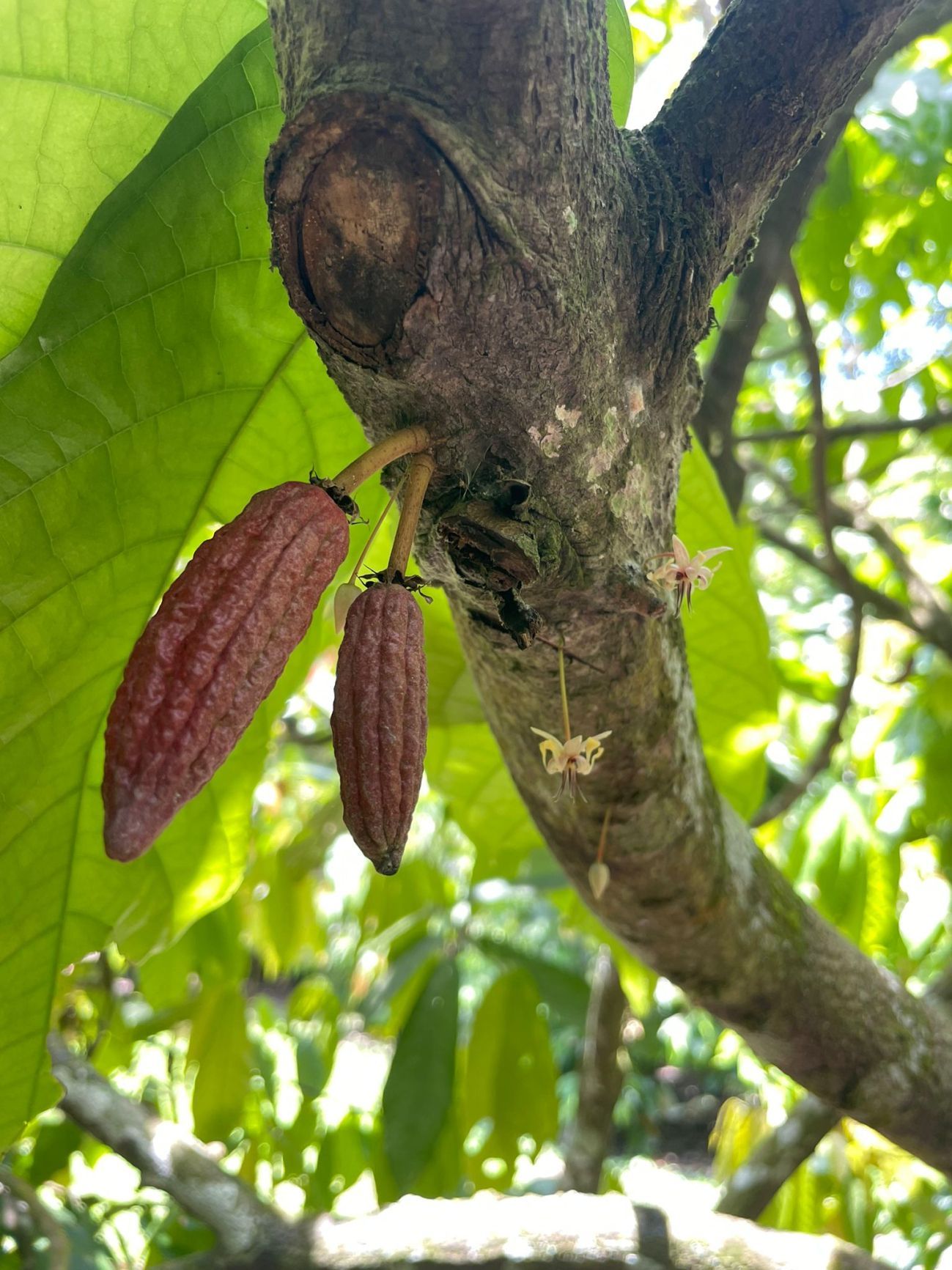
POLLINATION: NATURAL BALANCE
Cacao flowers are small, complex, and surprisingly selective. Bees, despite their reputation as star pollinators, are simply too large to access the inner structure of the flower. Instead, cacao depends on tiny insects called midges.
These insects can only transport small amounts of pollen and require very specific conditions to survive and reproduce: humid air, moist soil, and organic matter on the forest floor. Without this environment, pollination becomes extremely difficult.
Although cacao flowers contain both male and female parts, pollination must still occur between flowers on different trees – sometimes far apart for such small insects. This makes a healthy, biodiverse rainforest environment essential for cacao production.
FROM POD TO BEAN
Cacao trees grow best in warm, humid climates and thrive under the canopy of taller trees in evergreen rainforests. This natural shading protects the trees and supports steady growth.
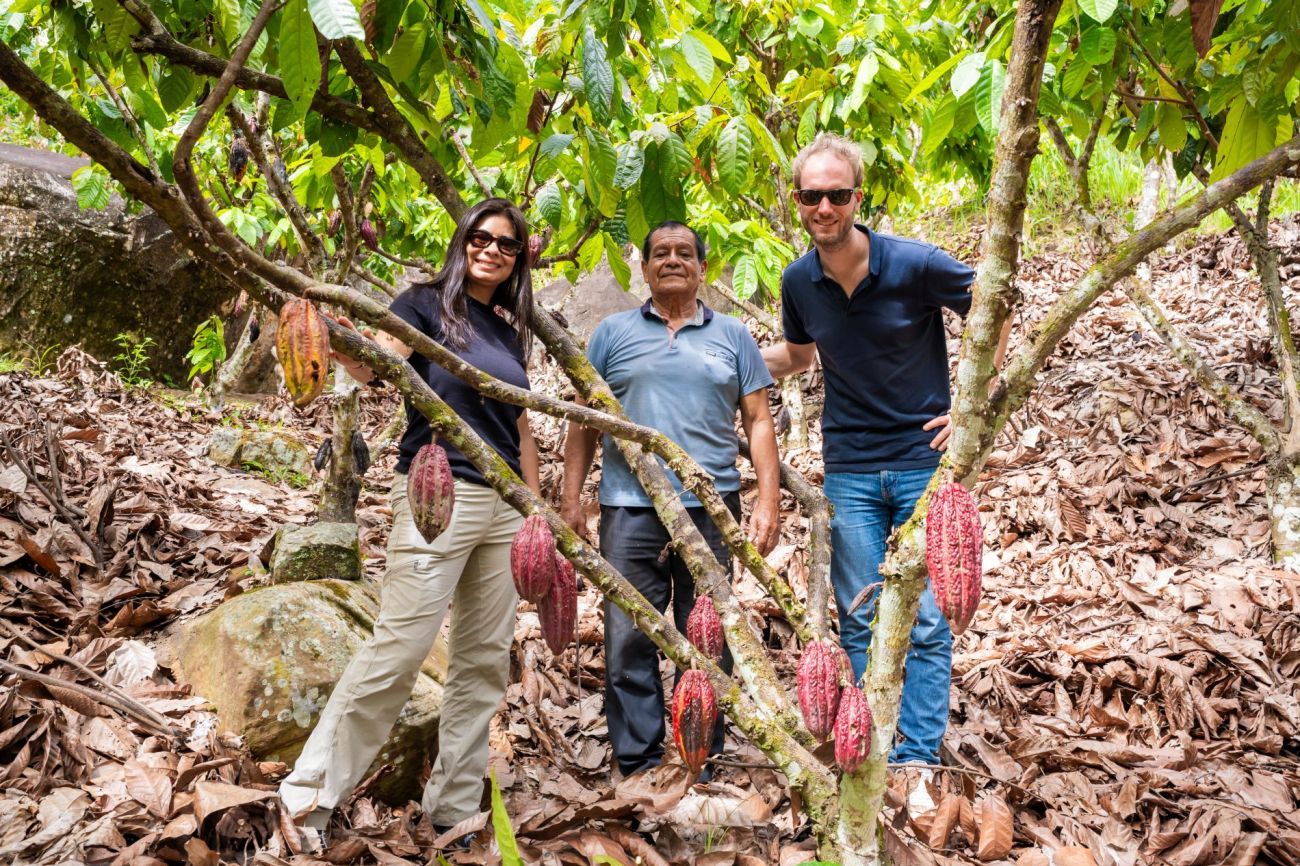
The fruits of the cacao tree, known as pods, grow directly on the trunk and main branches. Each pod can contain between 20 and 60 beans, surrounded by a sweet, white pulp. Once ripe, pods are harvested by hand using sharp tools to avoid damaging the tree. This careful approach allows new pods to grow on the same branch.
After harvesting, the pods are opened – often directly on the plantation. The husks are returned to the soil, where they help restore nutrients and support soil health.

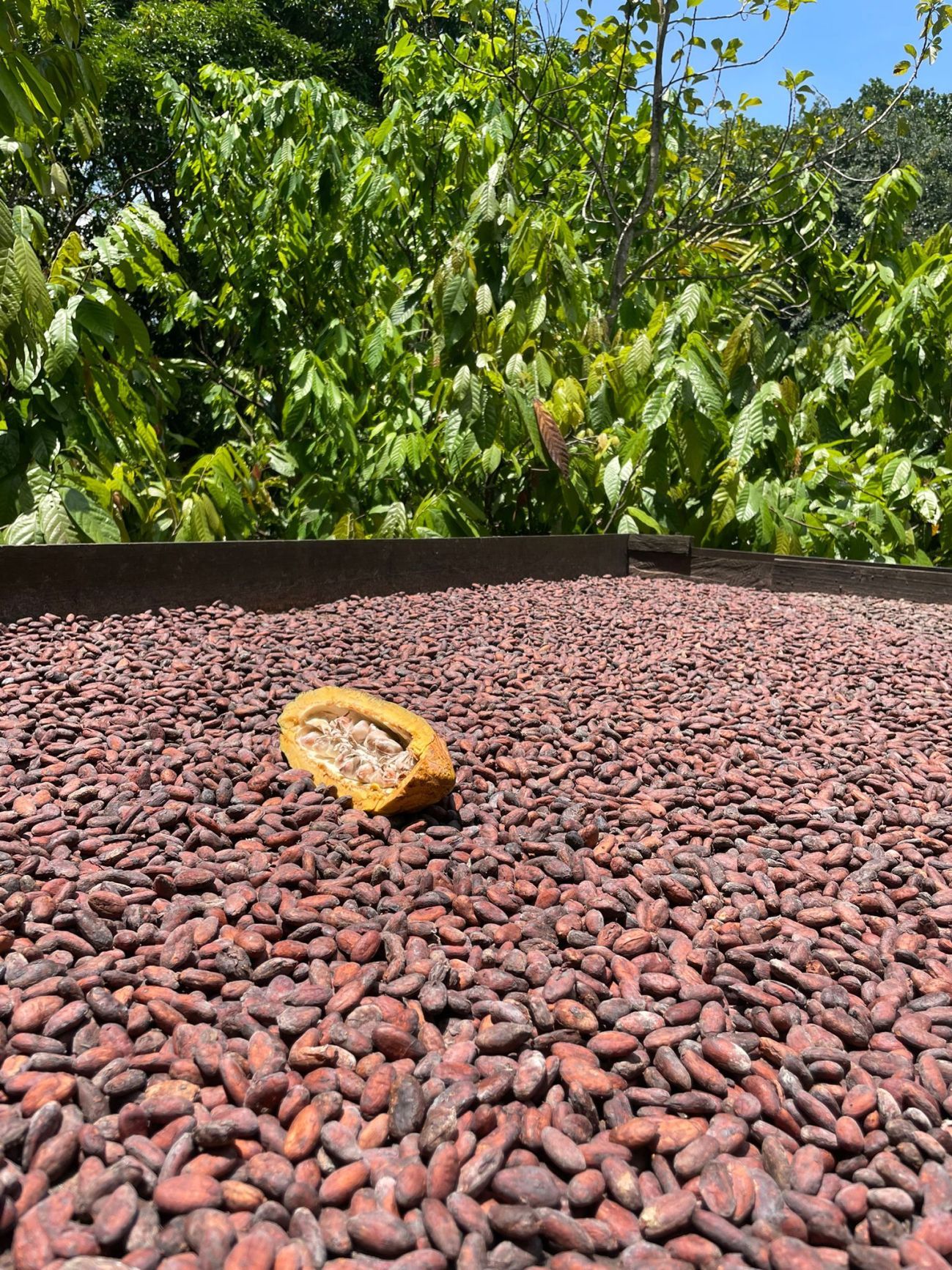
FERMENTATION & DRYING
Once removed from the pods, the beans undergo fermentation. During this process, the surrounding pulp breaks down and drains away, while complex biochemical reactions inside the beans begin to develop the characteristic flavour and colour of cocoa.
After fermentation, the beans are sun-dried. This step requires precision and experience. Drying too quickly interrupts flavour development, while drying too slowly can lead to mould. Natural sunlight is preferred, as it avoids smoke contamination and supports consistent quality.
The result is a bean ready to be transformed into high-quality cocoa powder and chocolate – proof that craftsmanship matters at every step.
CACAO IN DAILY PRACTICE
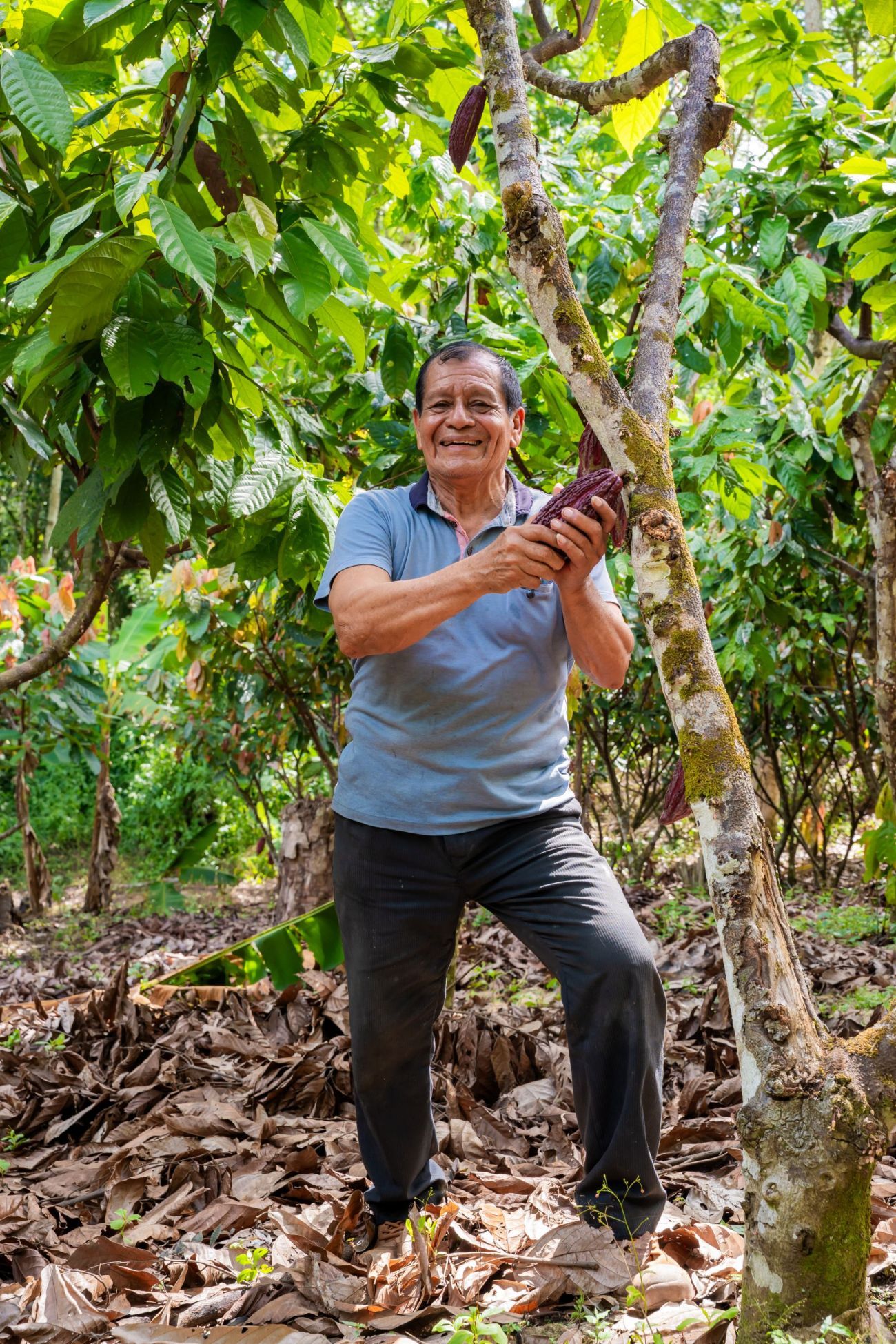
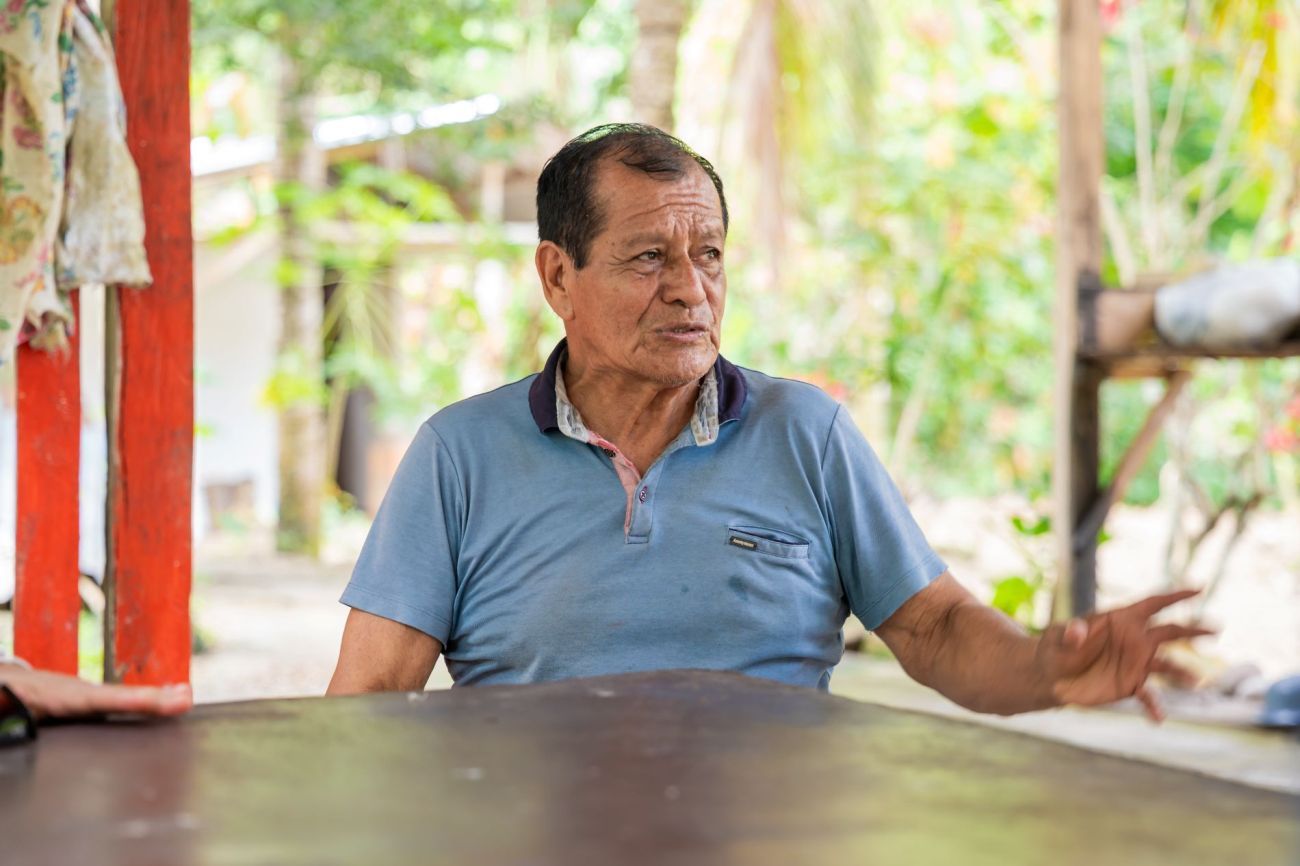
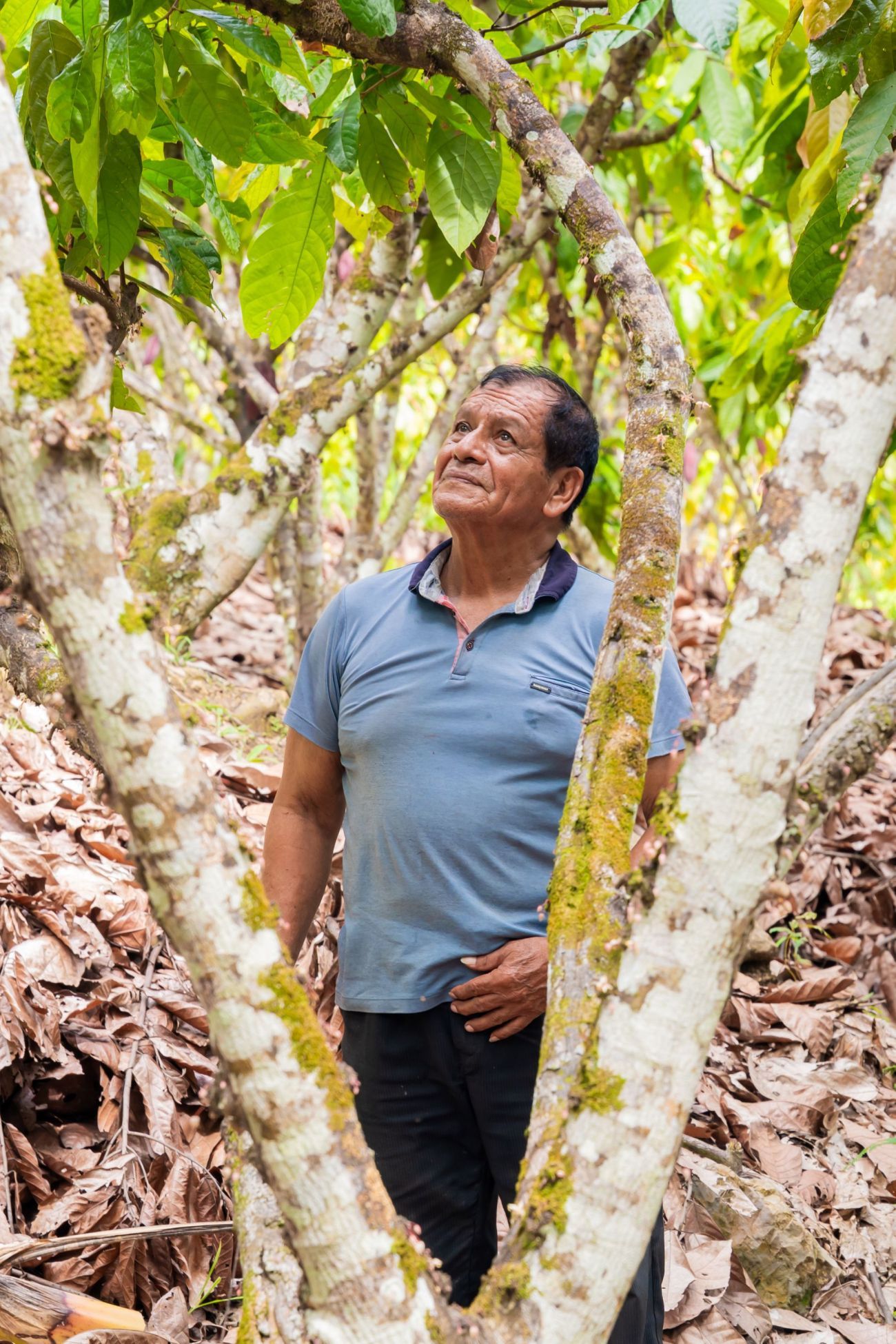
Behind every cacao tree is a farmer whose work is defined by consistency and care. In Peru, cacao farmer Mr. Lincor Ríos Linares manages his farm with a strong focus on daily involvement and long-term thinking.
Before working with cacao, Lincor worked in cattle ranching. One morning, during a routine visit to check on his livestock, he found that his cattle had been stolen. This loss became a turning point. In response, he made a practical decision: clear the land and plant cacao. As he explains, “they might take some cacao pods, but they cannot take everything.”
Today, he is responsible for the day-to-day management of the cacao plot owned by his wife Mrs. Lily Gómez de Ríos, applying experience, discipline, and hands-on care. His story reflects what sustainable cacao farming truly requires: adaptability, commitment, and steady work over time – season after season.

FIND OUT MORE
Discover the stories behind our organic ingredients: where they come from, how they grow, and the journey they take to reach their final destinations.
Interested in sourcing organic cocoa for your business? Get in touch with us, and we’ll be happy to share everything about our organic supply chain and product range.
Share page