THE LINK BETWEEN PESTICIDES AND PARKINSON'S
Parkinson’s disease is a serious neurological condition affecting millions of people worldwide. There is growing scientific attention on environmental factors that may play a role in the development of the disease. Exposure to pesticides is one of the factors currently being studied.
As a company operating within the organic food chain, we work according to the precautionary principle. When there are credible indications that certain substances may pose risks to people and the environment, we believe caution must come first. From this conviction, we support the work of ParkinsonNederland. This organisation is committed to scientific research, improved treatments and support for people living with Parkinson’s.
Below, we share two personal stories. Stories that resonate. Stories that raise questions. Stories that underline the importance of independent research and a careful approach to our environment.
Although scientific research does not yet provide all the answers, attention continues to grow regarding the possible relationship between long-term exposure to certain pesticides and the risk of Parkinson’s. For that reason, we believe it is important to give space to personal experiences, in connection with organisations working towards solutions.
STORIES THAT MATTER
ONE COMMON FACTOR
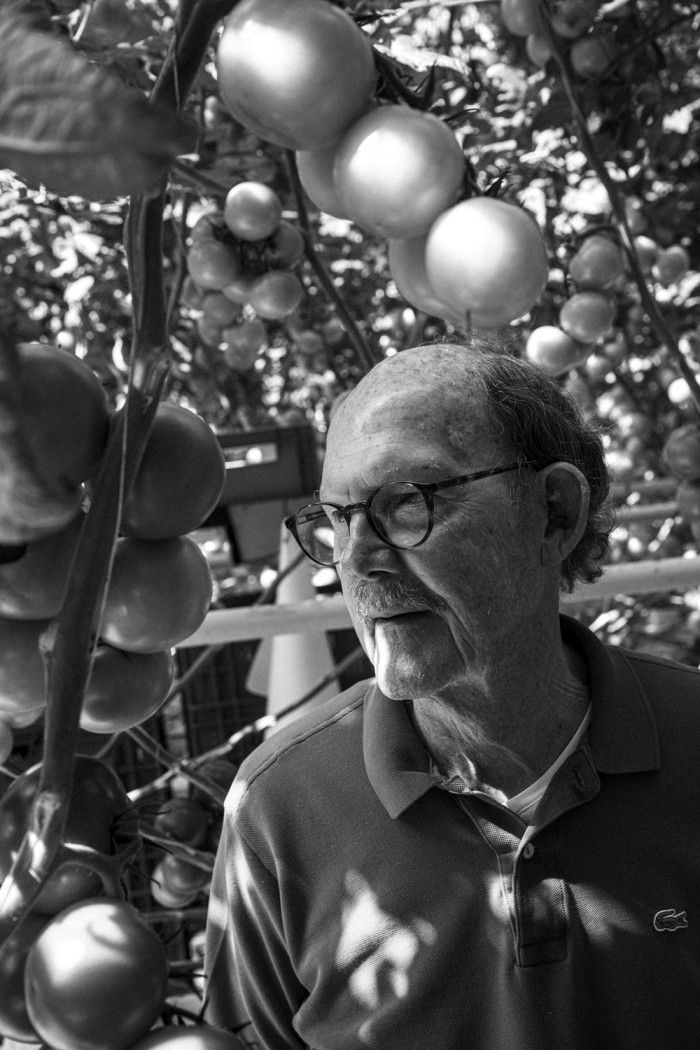
Nico grew up in the 1960s in the southern province of The Netherlands. As a schoolboy, he worked in tomato greenhouses in Nieuwerkerk aan den IJssel. At the time, he hardly considered that pesticides were regularly sprayed there. It was simply part of the job. It was permitted. And therefore assumed to be safe.
Only much later, after reading the book Silent Spring, did he begin to realise that chemical pesticides could also affect human health. Even then, he never imagined it might impact his own.
Four years ago, Nico was diagnosed with Parkinson’s disease. What has stayed with him ever since is a striking pattern within his former group of friends: of the five men who worked in those greenhouses in the 1960s, four have since developed Parkinson’s and one neuropathy. The shared factor? They all worked in the same tomato greenhouses during the same period.
Today, when walking through agricultural areas, he is sometimes still confronted with pesticide spray drifting through the air. It reminds him how close potential exposure can be. His wish is clear: more independent scientific research to clarify the role pesticides may play in the development of Parkinson’s, and public policy that places the precautionary principle above economic interests.
- Nico
Picture by Kadir van Lohuizen
RISK CLOSE TO HOME
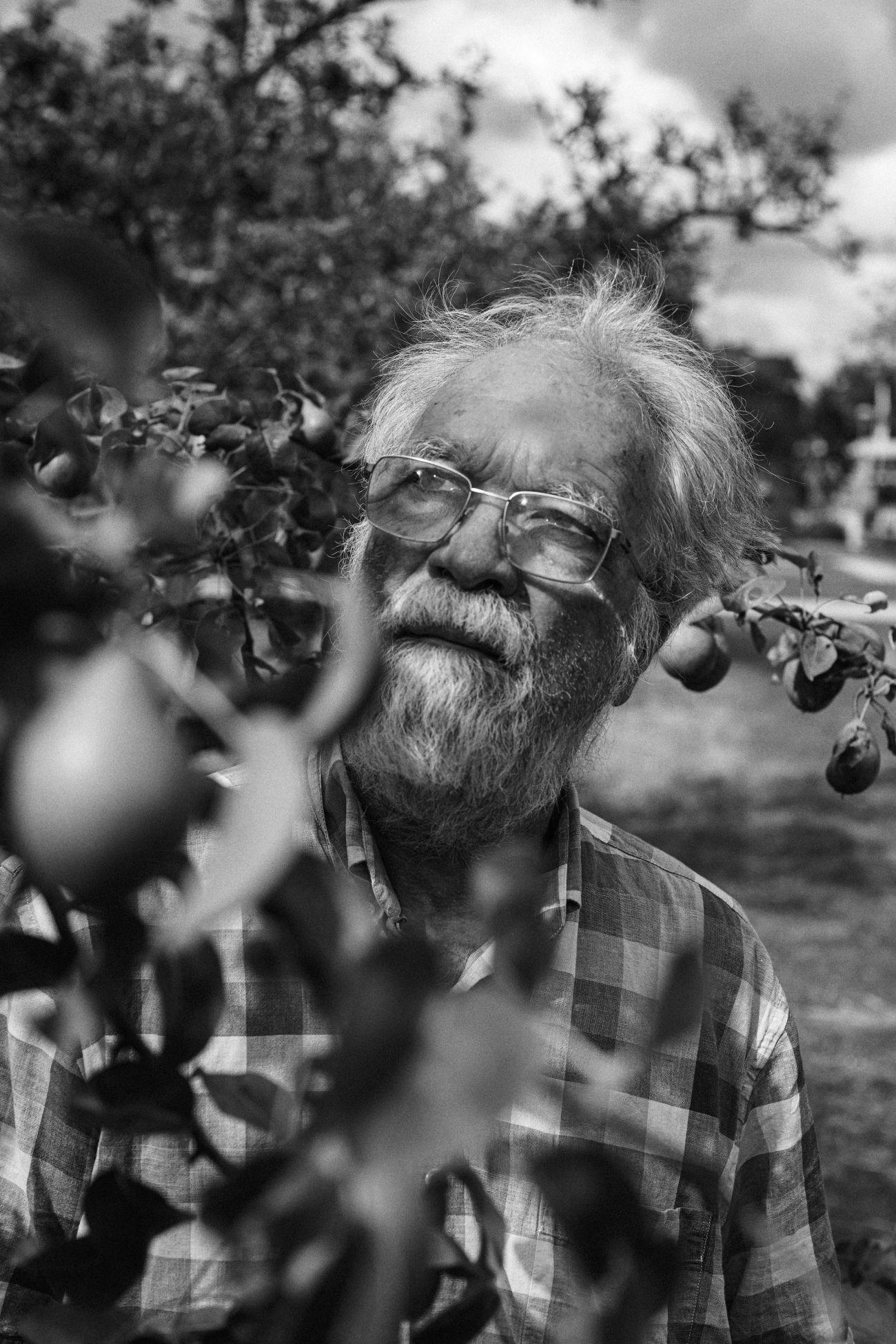
In 1962, Arie moved as a child from the city to a village in Limburg (The Netherlands). Their new home bordered a fruit orchard that continued to be actively sprayed for several years. On still days, pesticide mist would drift into their kitchen. At the time, it did not seem unusual. If it was permitted by the government, it must be safe - that was the prevailing belief.
Decades later, that perspective changed. In 2017, Arie was diagnosed with Parkinson’s. Shortly afterwards, his sister received the same diagnosis. She could not tolerate the medication and passed away the following year. In their family of five, two members were ultimately diagnosed. Arie also suspects his father had the disease, although it was never formally confirmed.
For him, pesticides are no longer an abstract issue. They have become a personal reality. An experience that leads him to advocate for a society where public health consistently outweighs economic interests. In his view, the potential risks of pesticides are still too often downplayed.
- Arie
Picture by Kadir van Lohuizen
IMPACT PARTNER
The number of people living with Parkinson’s continues to grow. The disease affects young and old. Men and women alike. Parkinson’s is now the fastest growing neurological condition worldwide. Particularly in highly industrialised countries such as the Netherlands, patient numbers are rising rapidly.
We support our Impact Partner ParkinsonNederland, which raises funds and awareness to enable essential research into Parkinson’s and its underlying causes. Together, we aim to share knowledge, increase awareness and encourage others to contribute to a healthier living environment.
WORKING TOGETHER FOR IMPACT
Across the four principles of organic agriculture - Care, Health, Ecology and Fairness - we collaborate with partners who contribute to knowledge sharing, biodiversity and fair supply chains. ParkinsonNederland is our Impact Partner under the Health principle.
Share page